

Description
🌿 Holy Basil (Tulsi) – Detailed Description
🔍 Overview
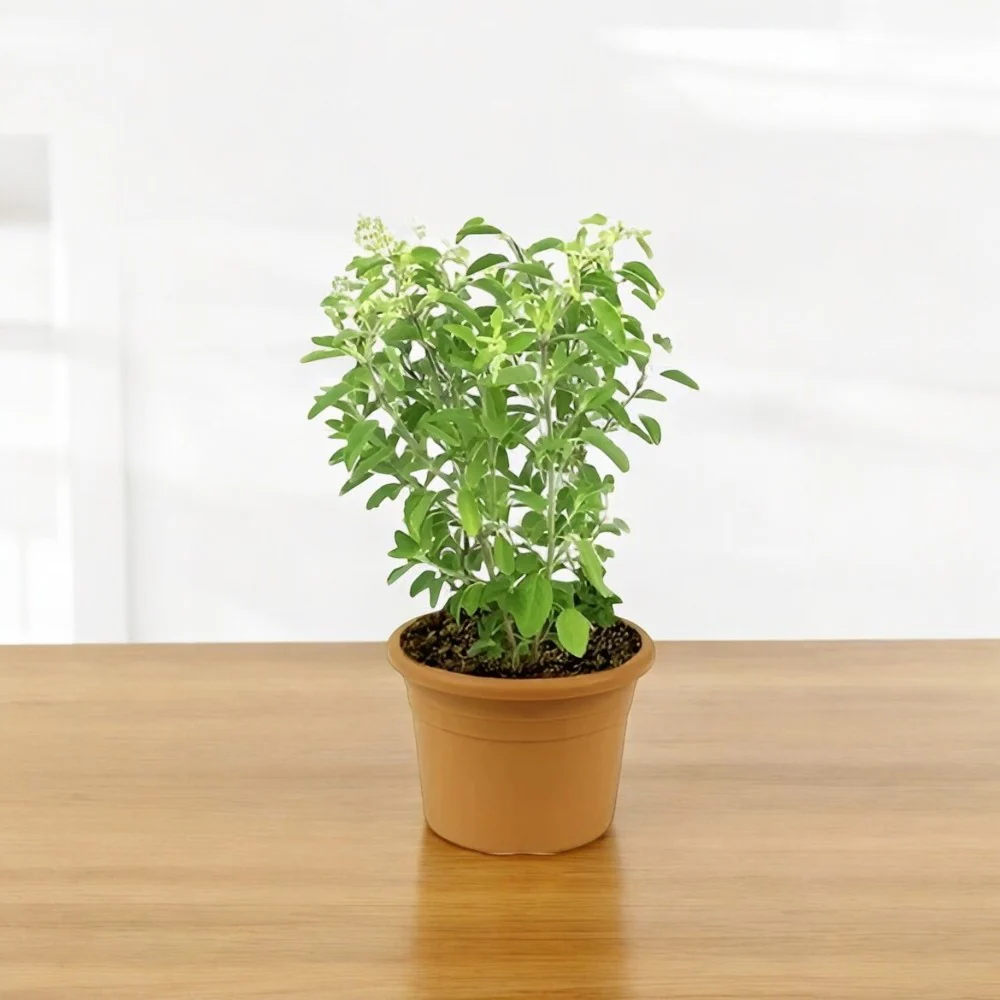
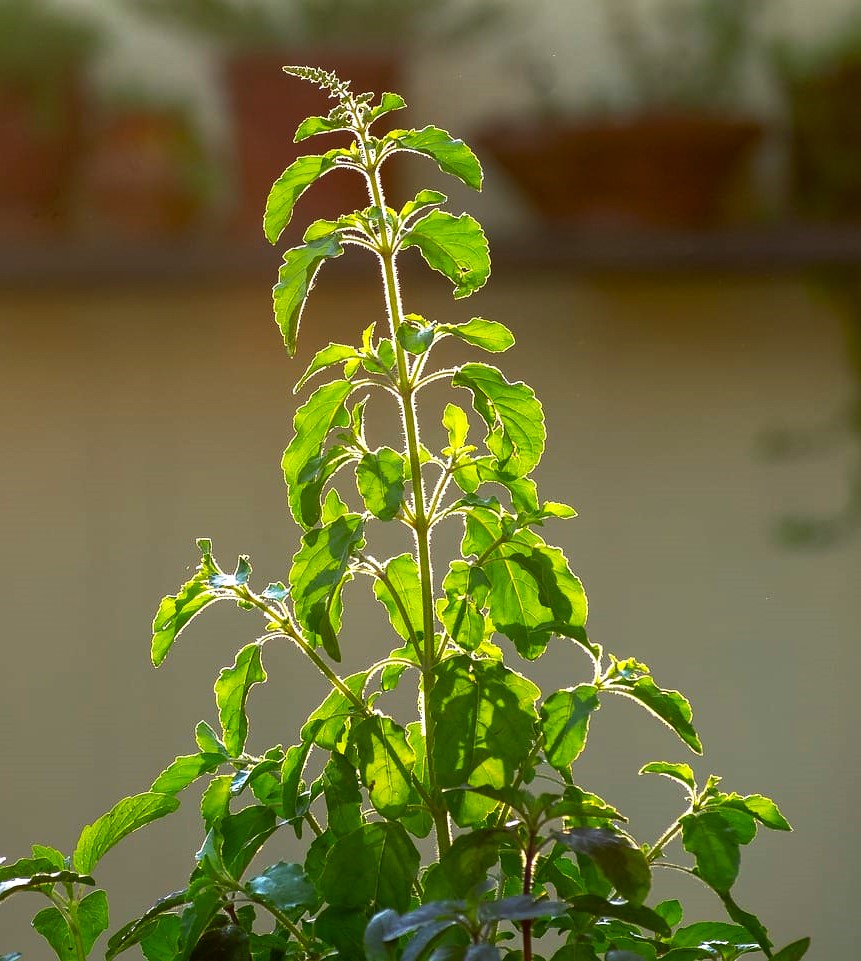
Holy Basil, or Tulsi, is a sacred plant in Indian culture and traditional medicine, revered for its spiritual significance and powerful healing properties. A member of the mint family (Lamiaceae), Holy Basil is an aromatic shrub known for its slightly spicy, clove-like scent and medicinal leaves. It is widely used in Ayurvedic medicine for its adaptogenic, anti-inflammatory, and immune-boosting qualities.
🌱 Botanical Information
-
Scientific Name: Ocimum tenuiflorum (syn. Ocimum sanctum)
-
Common Names: Holy Basil, Tulsi, Sacred Basil
-
Family: Lamiaceae (Mint family)
-
Origin: Native to India and Southeast Asia
-
Plant Type: Perennial shrub (tropical climates); often grown as an annual elsewhere
🍃 Plant Characteristics
| Feature | Description |
|---|---|
| Leaves | Green or purplish, oval-shaped leaves with serrated edges. The leaves are aromatic and used for medicinal and religious purposes. |
| Height | Typically grows 1–2 feet tall, but can reach up to 3 feet in ideal conditions. |
| Flowers | Small, tubular, purple or white flowers bloom on spikes. The plant flowers in warm seasons. |
| Aroma | Strong, spicy, clove-like fragrance with hints of pepper and mint. |
🌞 Growing Conditions
| Requirement | Details |
|---|---|
| Light | Needs full sun (at least 6 hours per day) for optimal growth. |
| Watering | Water regularly but allow soil to dry slightly between watering. Avoid waterlogging. |
| Temperature | Thrives in warm climates (20–35°C / 68–95°F). Sensitive to frost. |
| Soil | Prefers well-draining soil rich in organic matter. Slightly acidic to neutral pH (6.0–7.5). |
| Fertilizer | Light feeding with organic compost or balanced fertilizer during growing season. |
✂️ Care & Maintenance
-
Pruning: Regular pinching encourages bushier growth and prevents flowering (which slows leaf production).
-
Harvesting: Leaves can be harvested once the plant has matured (about 6–8 weeks). Best picked in the morning for maximum potency.
-
Propagation: Easily propagated from seeds or cuttings.
-
Pests/Diseases: Susceptible to aphids, spider mites, and fungal diseases if overwatered.
🌟 Health Benefits & Uses
-
Adaptogen: Helps the body cope with stress and anxiety.
-
Immune Booster: Supports respiratory health and immunity.
-
Anti-inflammatory & Antioxidant: Reduces inflammation and combats oxidative stress.
-
Digestive Aid: Promotes healthy digestion and metabolism.
-
Religious Use: Considered sacred in Hinduism; used in daily prayers and rituals.
Common Uses:
-
Herbal teas (Tulsi tea)
-
Tinctures and extracts
-
Fresh leaf consumption
-
Ayurvedic remedies


Reviews
There are no reviews yet.