

Description
🌙 Moonstone Plant (Pachyphytum oviferum) – Detailed Description
🔍 Botanical Classification
-
Scientific Name: Pachyphytum oviferum
-
Common Names: Moonstone plant, Sugar Almond plant
-
Family: Crassulaceae
-
Genus: Pachyphytum
-
Origin: Native to the rocky cliffs of San Luis Potosí, Mexico
🌿 Plant Morphology
1. Leaves:
-
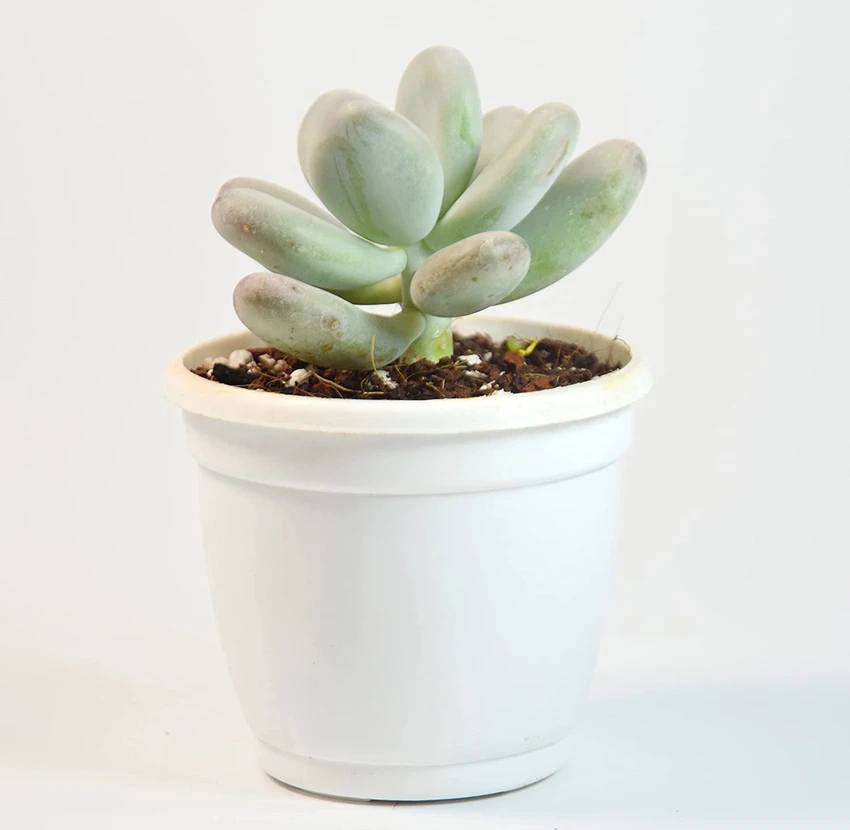
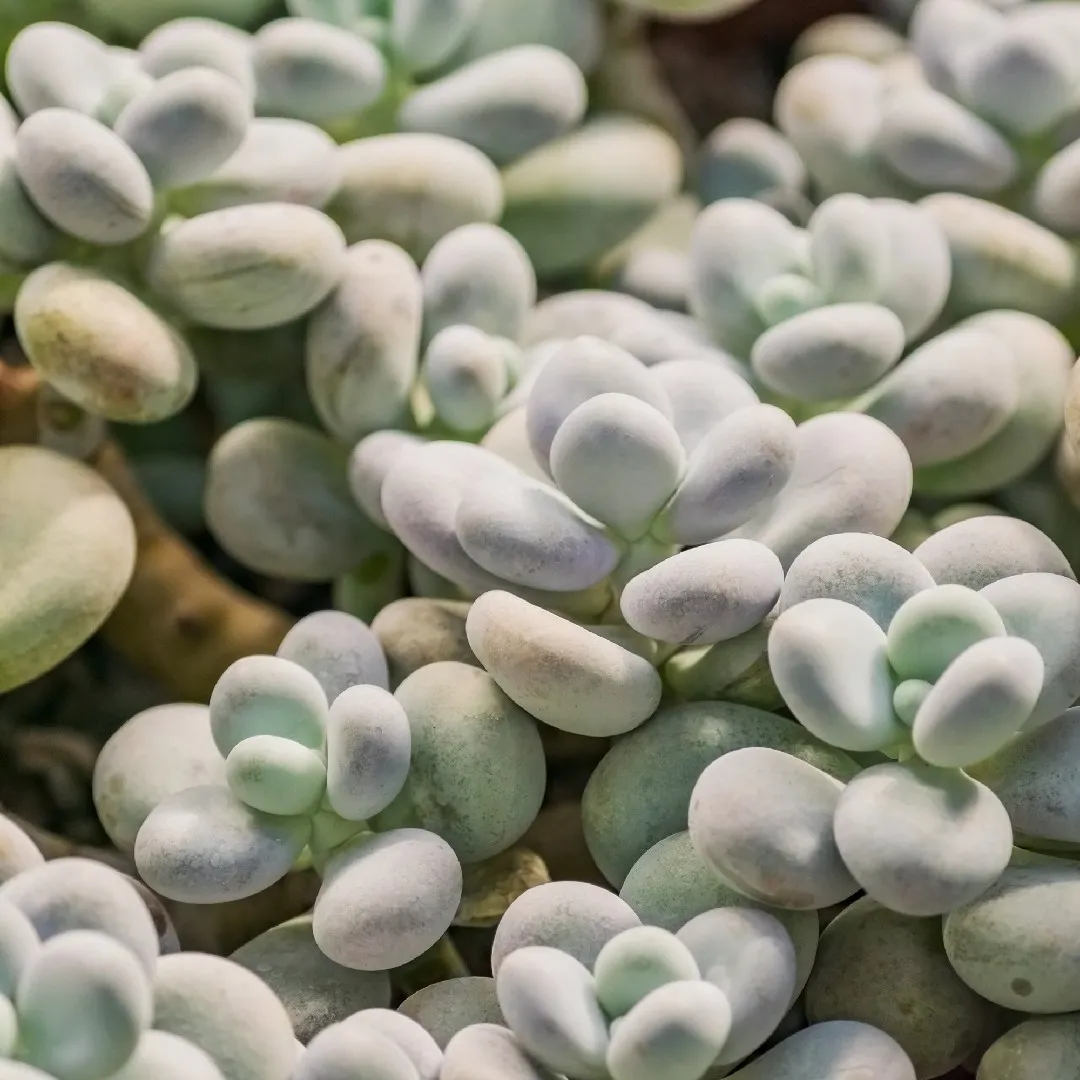
Thick, fleshy, oval-shaped, and resemble polished pebbles or eggs—a signature trait.
-
Covered in a fine, powdery wax coating (called farina) that gives a pastel-like or frosty look.
-
Leaf color ranges from pale blue, silver-gray, lavender, to soft pink depending on sunlight, temperature, and stress.
-
Arranged in tight rosettes, often growing upright or slightly leaning.
2. Stem:
-
Short and compact when young, with some elongation over time, especially under low-light conditions.
3. Flowers:
-
Bloom in late winter or early spring.
-
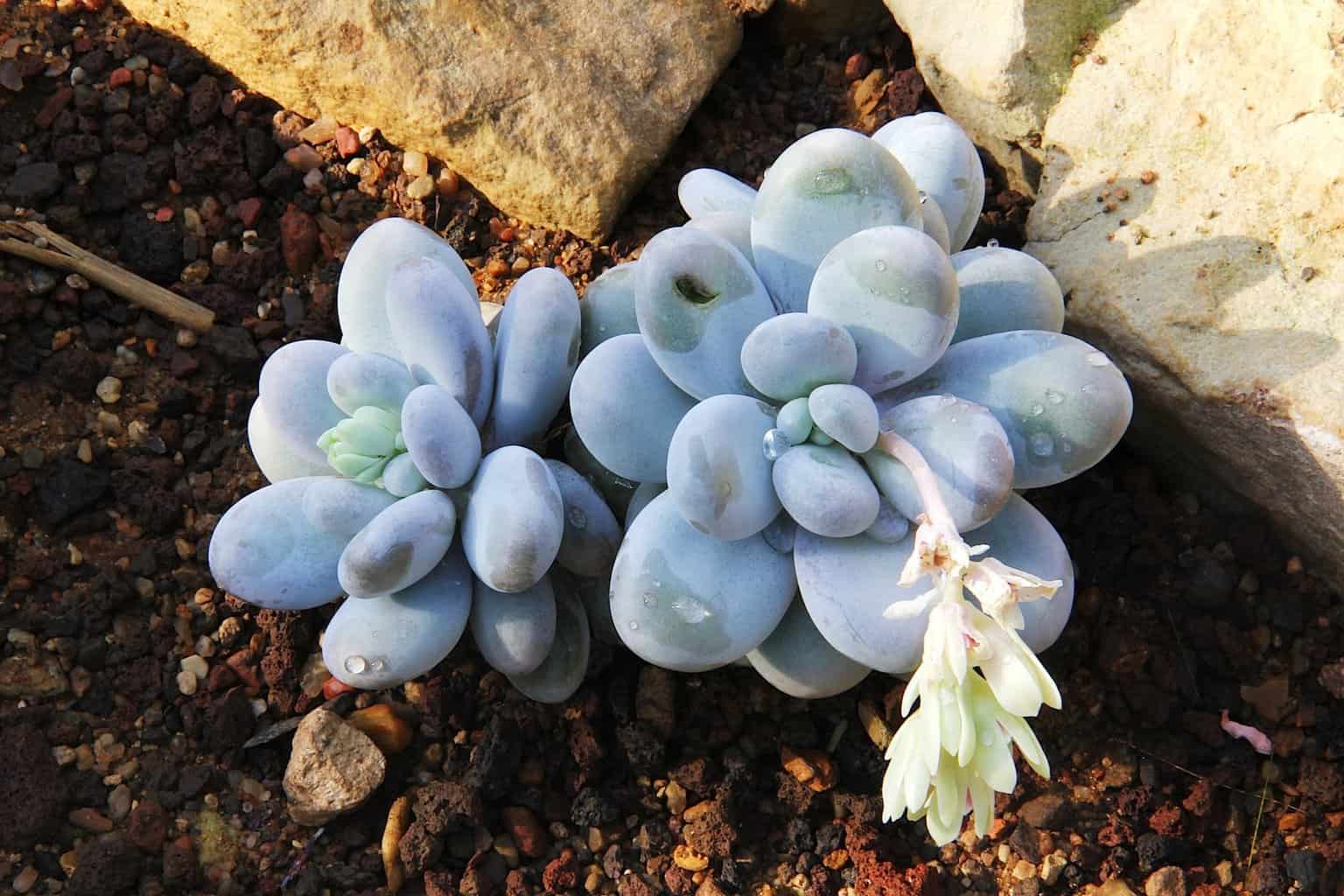
Flowers are small, tubular or bell-shaped, often pink, coral, or red-orange.
-
Carried on long arching stems called inflorescences that rise above the plant body.
🌞 Growing Conditions & Care
| Aspect | Description |
|---|---|
| Light | Prefers bright, indirect light. Can handle direct sunlight in the morning or late afternoon but may scorch in intense midday sun. Color intensifies with more light. |
| Watering | Water only when soil is bone dry. Overwatering is a common killer—causes root and stem rot. Use the “soak and dry” method. |
| Humidity | Low humidity preferred. Avoid misting or high-humidity spaces. |
| Temperature | Thrives in warm temperatures between 18–24°C (65–75°F). Not frost-tolerant—must be kept indoors or protected in cold climates. |
| Soil | Requires well-draining soil—a cactus or succulent mix is ideal. Can be mixed with perlite or coarse sand for better drainage. |
| Pot | A terra-cotta or ceramic pot with good drainage holes is best. Avoid plastic if possible. |
| Fertilizer | Feed lightly during the growing season (spring–summer) with a diluted cactus fertilizer once a month. No need to fertilize in winter. |
🌱 Propagation
-
Leaf Cuttings: Gently twist off a healthy leaf and let it callous for 2–3 days before placing it on soil.
-
Offsets: Remove baby rosettes growing at the base and replant them once they root.
-
Stem Cuttings: Can be propagated from mature stems if needed.
⚠️ Common Problems
| Problem | Cause | Solution |
|---|---|---|
| Shriveled Leaves | Underwatering or old age | Water when soil is dry. Remove old lower leaves. |
| Mushy Leaves or Stem | Overwatering or poor drainage | Stop watering, remove affected parts, and repot in dry soil. |
| Leaf Drop | Sudden temperature change, overwatering | Keep temperatures stable and adjust care routine. |
| Sunburn | Too much direct sunlight too quickly | Acclimate to sun gradually and use partial shade. |
✨ Interesting Facts
-
The name “Pachyphytum” means “thick plant” in Greek—apt for its plump, water-storing leaves.
-
The farina coating not only makes it beautiful but also serves to reflect UV light and retain moisture.
-
Due to its ethereal look and easy maintenance, it’s a favorite for indoor decor, terrariums, and succulent arrangements.
If you’d like, I can create a care guide poster, an infographic, or help you identify your specific Moonstone variety. Let me know!
Reviews
There are no reviews yet.