

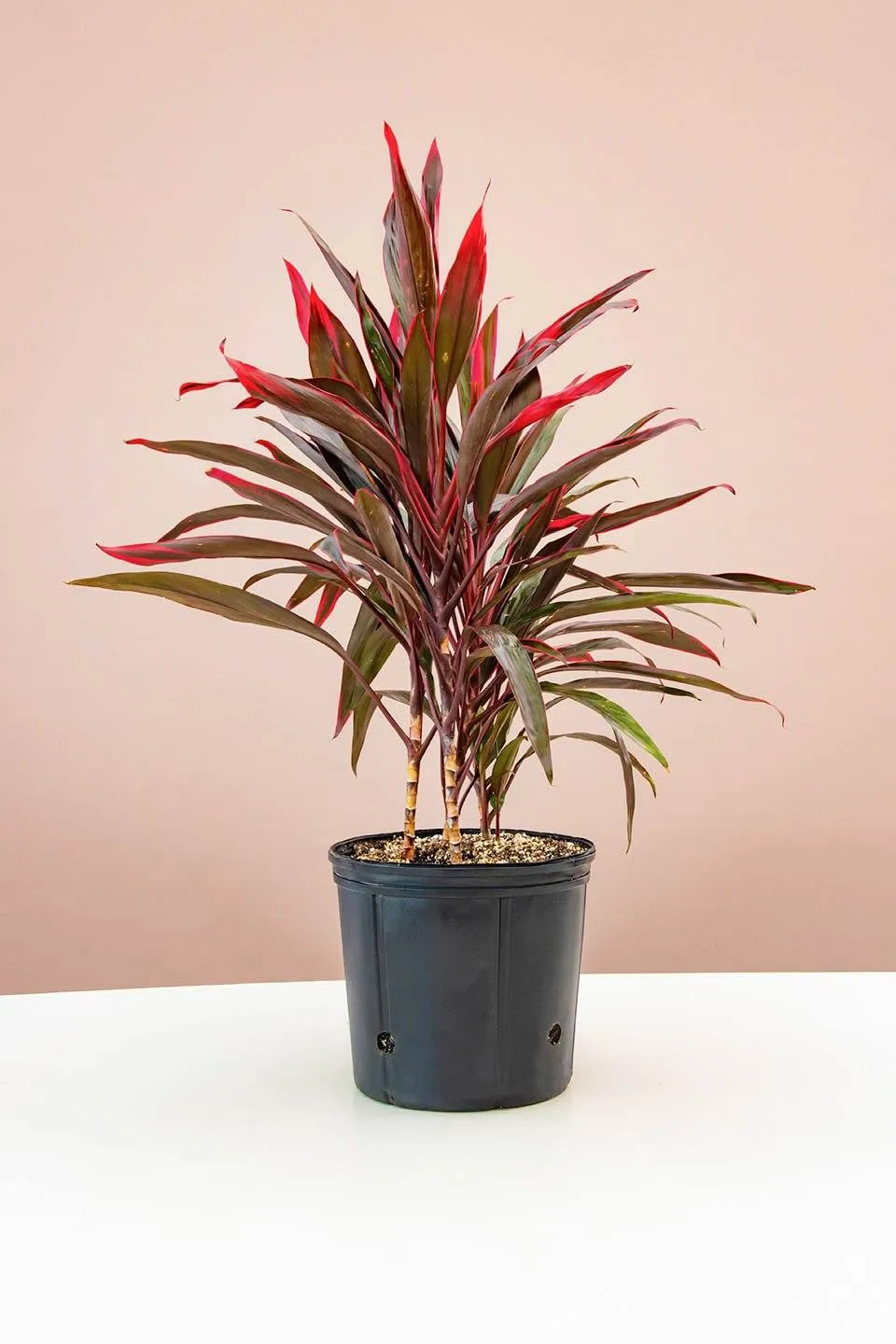


Description
🌿 Ti Plant – Detailed Description
🔍 Overview
The Ti Plant, scientifically known as Cordyline fruticosa, is a striking tropical evergreen prized for its vibrant, colorful foliage. With sword-like leaves in shades of green, red, pink, purple, or bronze, it is often used as a bold ornamental feature in both indoor and outdoor settings. Native to Southeast Asia and the Pacific Islands, the Ti Plant is also steeped in cultural significance, especially in Hawaii and Polynesia, where it symbolizes luck and protection.
🌱 Botanical Information
-
Scientific Name: Cordyline fruticosa
-
Common Names: Ti Plant, Hawaiian Ti, Good Luck Plant
-
Family: Asparagaceae
-
Origin: Southeast Asia, Papua New Guinea, and Polynesia
-
Plant Type: Tropical evergreen shrub or small tree
🍃 Plant Characteristics
| Feature | Description |
|---|---|
| Leaves | Long, arching, lance-shaped leaves (12–30 inches long) in vibrant colors including solid green, red, pink, and variegated patterns. |
| Height | Typically grows 3–6 feet indoors, but can reach up to 10 feet outdoors in tropical climates. |
| Flowers | Small, star-shaped flowers in white, lavender, or pink bloom in clusters, followed by red or purple berries. Flowers are more common outdoors. |
| Growth Habit | Upright, cane-like growth with new leaves forming at the top. It can become woody and develop a palm-like appearance over time. |
🌞 Growing Conditions
| Requirement | Details |
|---|---|
| Light | Prefers bright, indirect sunlight. Some varieties can tolerate direct morning light. Low light may reduce leaf color vibrancy. |
| Watering | Keep the soil consistently moist but not soggy. Allow the top inch to dry before watering again. Avoid letting it dry out completely. |
| Temperature | Ideal range is 18–30°C (65–85°F). Not frost-tolerant; must be protected or brought indoors in cooler climates. |
| Humidity | Prefers high humidity. Misting or using a humidifier helps prevent leaf browning. |
| Soil | Well-draining, rich potting mix. A mix of peat, perlite, and compost works well. |
| Fertilizer | Feed every 4–6 weeks during spring and summer with a balanced liquid fertilizer. Reduce feeding in fall and winter. |
✂️ Care & Maintenance
-
Pruning: Remove yellow or damaged leaves regularly. You can also trim stems to control height or encourage bushier growth.
-
Repotting: Repot every 1–2 years or when rootbound.
-
Pests: May attract spider mites, mealybugs, and aphids. Keep leaves clean and inspect regularly.
-
Toxicity: Toxic to pets (cats and dogs) if ingested.
🌟 Why Grow a Ti Plant?
-
Adds bold tropical color indoors or in gardens.
-
Culturally significant and believed to bring good luck and protection.
-
Relatively easy to care for with the right humidity and light.
-
Perfect for brightening up living rooms, patios, and shaded outdoor spaces.
Reviews
There are no reviews yet.